Sep 19, 2025
Ideal Ingredients for a Heat-Protecting Formulation
Hair needs protection against excessive heat exposure. Heat energy from thermal styling equipment is high enough to denature the keratin of hair fibre and cause damage to its cosmetic features. Hair loses its protein content, becomes dry and fragile, and increases the friction on the cuticle surface. Heat also causes colour fading and loss of hair’s natural shine.1-4 Thermal-protecting formulations are designed to address the adverse impact of heat. Their main objective is to control heat penetration, preserve the keratin structure, and enhance the shine of the cuticle layer. Besides this, the thermal protecting lotion also facilitates combing on wet & dry hair, removing tangles and making hair feel soft.
So, what ingredients make a heat-protecting lotion?
This blog describes choosing the right and ideal ingredients to formulate a heat-protecting lotion. Let’s go through it.
What makes an ingredient offer heat-protecting benefits?
An ideal heat-protecting ingredient is a substance that can withstand excessive & repeated heat exposure. Moreover, it needs to be scalp and hair-friendly and should positively affect the overall health and well-being of hair. As blow drying and flat ironing may generate smoke, this could be hazardous for the health of customers and hair stylists working in the salon, the ingredients should have a high smoke point. This means it should not degrade or burn easily and be thermally stable for the heat generated during blow drying & flat ironing.5
The blend of these ingredients should also glossify the fibers, improving their light interaction and offering a pleasant, radiant outlook.
Key factors in choosing the heat-protecting ingredients
Two key factors are considered in choosing an ingredient for heat protection
◉ Stability against heat energy
◉ High Smoke Point
A smoke point is the temperature at which a material degrades and burns, emitting smoke. This demonstrates its chemical degradation, and a high smoke point temperature highlights its thermal stability.
How do they work to protect Hair?
The cuticle is the first site of interaction and heat energy from thermal equipment is transferred through this cuticle layer reaching deep inside the cortex center. Hair needs some insulating material on the cuticle layer that can minimize the rate of heat transfer. This coating is very fine, delicate yet uniform on the cuticle layer ensuring that the whole strand is covered from the roots to the tips.
On exposure to heat, this coating serves its objectives and slows down the energy transfer, preserving the underlying keratin fiber.
Top Choice Ingredients for Heat Protection & Their Smoke Points
Keeping insight into the above criteria, our top choice ingredients are listed below along with smoke points.
◉ Dimethicone (326 oC)
◉ Refined Avocado Oil (271 oC)
◉ Refined Safflower Oil (266 oC)
◉ Sunflower Oil (252 oC)
◉ Mustard Oil (250 oC)
◉ Butyrospermum Parkii (Shea) Butter (233 oC)
◉ Almond Oil (221 oC)
◉ Argan Oil (220 oC)
So, where do we find these ingredients? Blending them in a product and extracting maximum benefits.
The answer is
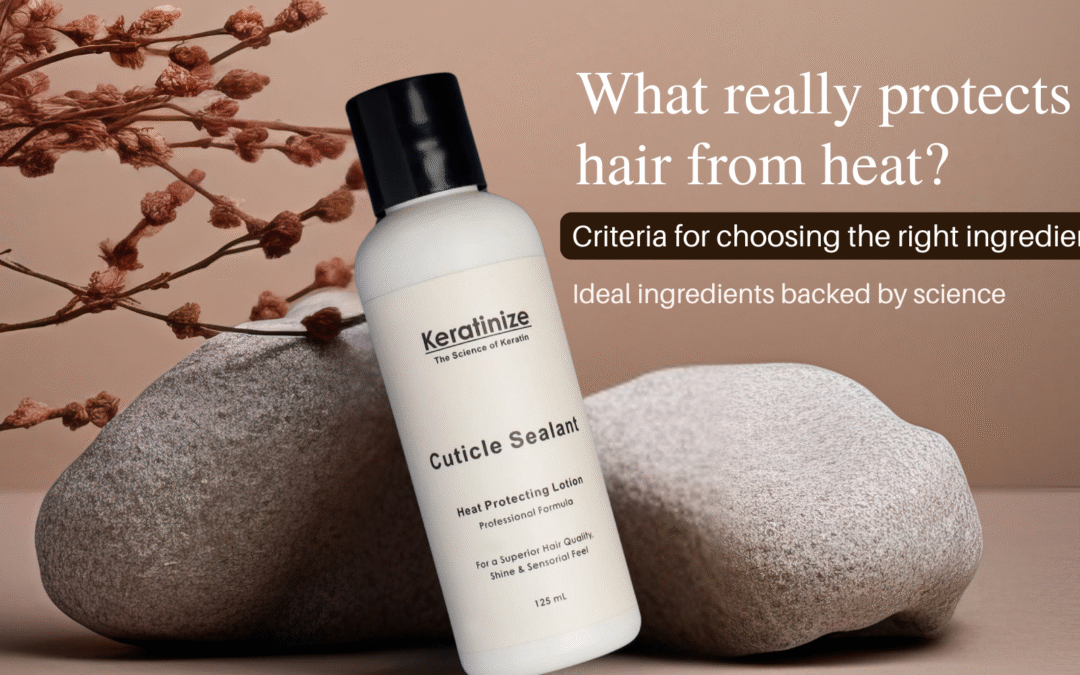
The Keratinize Cuticle Sealant
A product composed of sunflower oil and multi-functional high-tech modified silicones that are carefully selected to protect hair against heat exposure. The formulation also contains cetrimonium chloride, which is a light-textured and moderate molecular water hair-softening agent that also combats static charge density on medium to high porosity hairs.
Cuticle sealant also contains hydrolysed keratin, a potent cuticle smoothening and cortex-strengthening agent. During heat exposure, this naturally derived material plasticises with the keratin of hair fibre and enhances its mechanical strength. Shea Butter provides a special sensorial feel to dry hair, whereas, Zinc PCA ensures water-balance on thermally styled hair.
Unique Features of Keratinize Cuticle Sealant
◉ Light – Texture Creamy Lotion
◉ Non-greasy and no oil residues leftover
◉ Sunflower Oil, a key heat-protecting ingredient
◉ Multi-functional silicones to offer heat protection, shine, and cuticle smoothness
◉ Never let your hair dry out. Re-balance the hair’s moisture content after heat exposure.
What do you get in the end?
◉ Beautiful, Vibrant, Shiny Hair with a natural body & texture
References & Further Reading
1. Vagkidis, N.; Li, L.; Marsh, J. M.; Chechik, V., Synergy of UV light and heat in peptide degradation. Journal of Photochemistry and Photobiology A: Chemistry 2023, 439, 114627.
2. Lima, C. R. R. d. C.; Couto, R. A. A. d.; Freire, T. B.; Goshiyama, A. M.; Baby, A. R.; Velasco, M. V. R.; Constantino, V. R. L.; Matos, J. d. R., Heat‐damaged evaluation of virgin hair. Journal of cosmetic dermatology 2019, 18 (6), 1885-1892.
3. Harper, D.; Qi, J. C.; Kaplan, P., Thermal styling: efficacy, convenience, damage tradeoffs. Journal of cosmetic science 2011, 62 (2), 139-147.
4. Gamez-Garcia, M., The cracking of human hair cuticles by cyclical thermal stresses. Journal of the Society of Cosmetic Chemists 1998, 49 (3), 141-153.
5. CORBETT, J. F., The chemistry of hair‐care products. Journal of the Society of Dyers and Colourists 1976, 92 (8), 285-303.

Sep 19, 2025
Blow Dryer, Curling Rods & Flat Irons
Thermal styling is popular among consumers as a method to redefine their hairstyles. It provides excellent hair alignment with a defined curl pattern and sets the hair for a brief period. Electric devices deliver heat energy within a temperature range of 140 °c to 220 °c. In previous blogs, we noted that this heat energy can significantly damage the keratin in hair fibers. Managing this damage is crucial to preserving the integrity of hair and maintaining its natural texture, shine, and appearance.
This can only be achieved by correctly using heated equipment at the appropriate temperature, with pre-heat protection applied to the hair. Educating consumers and hair stylists on how to use this thermal equipment effectively is essential. This blog offers a practical manual for using a blow dryer, curling rod, and flat iron. Important questions are answered, including when to use these tools, how to use them, and how to ensure our hair’s health by minimizing the adverse effects of heat energy. How can we maintain a beautiful appearance after applying heat?
Familiarize yourself with the equipment.
Three types of equipment are commonly used for thermal styling
Blow Dryer – used to dry hair with hot air blowing in the temperature range of 60 oC – 70 oC. The objective is to dry out hair and remove moisture after the washing.
![]()

Curling Rod – A ceramic or metal rod that contains an electric filament for heating. The temperature ranges from 140 °c to 200 °c. A section of hair strands is inserted into the opening of the curling rod, and heat is applied for 1-3 minutes. This shapes the hair fibres into a circular pattern, transforming straight hair into curls. The heat setting maintains the curl for a short time; however, when washed, the hair returns to its original style.![]()

Flat Iron – A ceramic or metallic flat plate, hair is placed in between the plates and heated. The temperature ranges from 150 oC to 240 oC. The process is repeated multiple times to straighten curly hair and is set in a Bone-straight shape removing any curls.

Things to do before using thermal equipment
◉ Read through the manual & usage instructions for your blow dryer, curling rod or flat iron machine
◉ Check the temperature control and its functioning Wash hair and scalp Blot out excess water using a towel gently.
◉ Apply a combing lotion or preferably heat-protecting lotion
◉ Dry them using a blow dryer at a normal temperature
◉ Comb your hair gently
◉ Remove any knots and tangles
◉ Divide the whole scalp area into small sections
◉ You are ready for Curling Rod or Flat ironing
Things to avoid
Heat application without proper assessment of hair porosity and overall condition
Never do thermal styling on wet hair Expose hair fibers to heat without adequate protection. Use high temperature all in one go, slowly raise the temperature, use a gradient increase
Wet or Dry Hair: What to do?
Never do it on wet hair! Heating wet hair may intensify the extent of damage.
Hair adsorbs water molecules during washing and gains weight. Wet hair also has a higher diameter compared to dry hair due to longitudinal and lateral swelling. Applying heat generates steam in a localized position underneath the cuticle layer. This can be seen as a bumps or bubble formation under the microscope.
As a result, the surface becomes rough reducing the surface smoothness. It makes it difficult to comb and get rid of tangles. That’s why, it is not recommended to use a blow dryer, curling rod or flat iron on wet hair.
Pre-Heat Protection is Essential: Never Miss it Out
Applying a heat-protecting product is vital before using any sort of thermal styling technique. One should never do thermal styling without protection against heat energy. A good quality heat-protecting formulation must contain thermally stable ingredients that can withstand excessive and repeated exposure to heat. How to Treat Heat-Damaged Hair Functional silicones and some natural emollients can tolerate this heat. These ingredients have a high smoke point and do not degrade under the heat.
What temperature to go?
The answer to this question needs a careful assessment of the hair fiber texture and its porosity level. A correlation has been proposed here as a basic guideline for users.
◉ Assessing Hair Texture
◉ Fine Asian hair – Low to moderate temperature
◉ Medium Asian coarse – Moderate temperature
◉ Thick Asian Straight – Moderate to high temperature
◉ Assessing the Porosity level
◉ Low Porosity Virgin hair – Moderate to high temperature
◉ Medium Porosity Hair – Moderate to high temperature
◉ High Porosity Chemically processed – Low temperature
◉ Final Words & Tips
Thermal styling is a great approach to redefining your hairstyle, however, it requires some considerations before exposing hair to heat.
Make an assessment of your hair, its condition, level of dryness and porosity to assert potential heat-induced damage.
Avoid over-application of heat processing. Never do thermal styling on an everyday basis. It’s only once in a while to go.
Always do a trial test on a small section of hair before full head application of any new hair care routine.
Start with a low-temperature point and go slowly to a higher temperature level slowly increasing the heat.
During the week or so, follow up with a deep hydrating mask to mitigate heat damage to hair. This would restore the natural hair texture and regain its natural shine.
Thanks
Sep 19, 2025
Heat Damage to Hair Fiber
Thermal styling, reshaping, or straightening is common and popular among consumers. This processing alters the physical shape of the hair fiber temporarily and fixes it in a definite style for a short period.1-2 However, this heat exposure can damage the hair fiber. Hair comprises protein (keratin); heat can denature keratin like other proteins. Heat or thermal damage is a major concern to hair quality, damage to fiber integrity, loss of gloss, and may even cause hair breakage.3-6 Here, we study the basics of heat damage to the human hair fiber, the nature of damage to the fiber’s structure and morphology, and how we can preserve hair fiber against repeated exposure to heat energy.
Blow Drying & Flat Ironing, Curling Rods
Blow drying is a commonly used approach to quickly drying wet hair fibers and styling them in the desired shape soon after showering. Flat irons or curly rods press hair fibers between ceramic or metallic plates to straighten or curl them using heat. All these techniques and equipment convert electric energy into heat energy, which is subsequently used for hair processing.
What temperature do these types of equipment go?
The amount of heat or temperature of the air used varies with the consumer’s choice. A typical blow dryer with hot heat blowing may have a temperature of 60 – 70oC while flat ironing is generally carried out at 150 – 240 oC degrees Celsius (350 – 400 F).
Scientific studies have confirmed that higher heat means a greater decrease in the alpha-helical content of protein. This translates into a higher protein loss from the inner cortex of hair fiber.
What Happens to Hair on Heating?
Keratin Denaturation
Keratin is the protein that makes most of the hair’s mass. Proteins are organic molecules and they are sensitive to heat energy. All proteins undergo permanent deformation on heating. A simple example is boiling/frying an egg. Here, albumin changes permanently and can not be reversed.
Similarly, permanent changes in keratin structure on heating alter its physical and chemical properties. The thermal styling techniques are designed to straighten, or style hair fibers and offer a better style retention. However, exposure to heat energy and high elevated temperature denatures the keratin protein leading to several negative cosmetic features to hair fibers. These adverse changes are collectively termed “Keratin Denaturation” (Changes in Keratin structure). Let’s look at some key thermodynamic data about keratin.
Thermal Parameters of Hair Keratin
◉ Denaturation Temperature for Caucasian Dry Hair = 231 oC
◉ Denaturation Temperature for Caucasian Wet Hair = 151 oC
On examining these denaturation temperatures to the temperature levels of thermal equipment, it is clear that these types of equipment can cause significant keratin denaturation. Wet hair is more easily and highly vulnerable to denaturation and has more damage than dry hair due to its high water content and localized steam generation. Steam is generated just underneath the cuticle layer when wet hair is heated. This causes chipping and bubbling, making the surface rough and bumpy. Furthermore, steam has a higher heat capacity than hot air, which further intensifies heat insult and damage extent.
Adverse Impact on Hair Health
A few common signatures of hair damage are listed here as compiled from the science literature.
◉ Cuticle Chipping & Removal
◉ Surface roughness – due to cuticle removal, and protein degradation
◉ Difficult to Comb – due to cuticular damage
◉ Fiber Breakage & Split-ends – higher force required to comb
◉ Dryness – due to water loss
◉ Loss of Shine, Natural Texture, and Bounce
◉ Compromised Sensorial Feel
◉ Color Fading
◉ Frizz – Static Charge
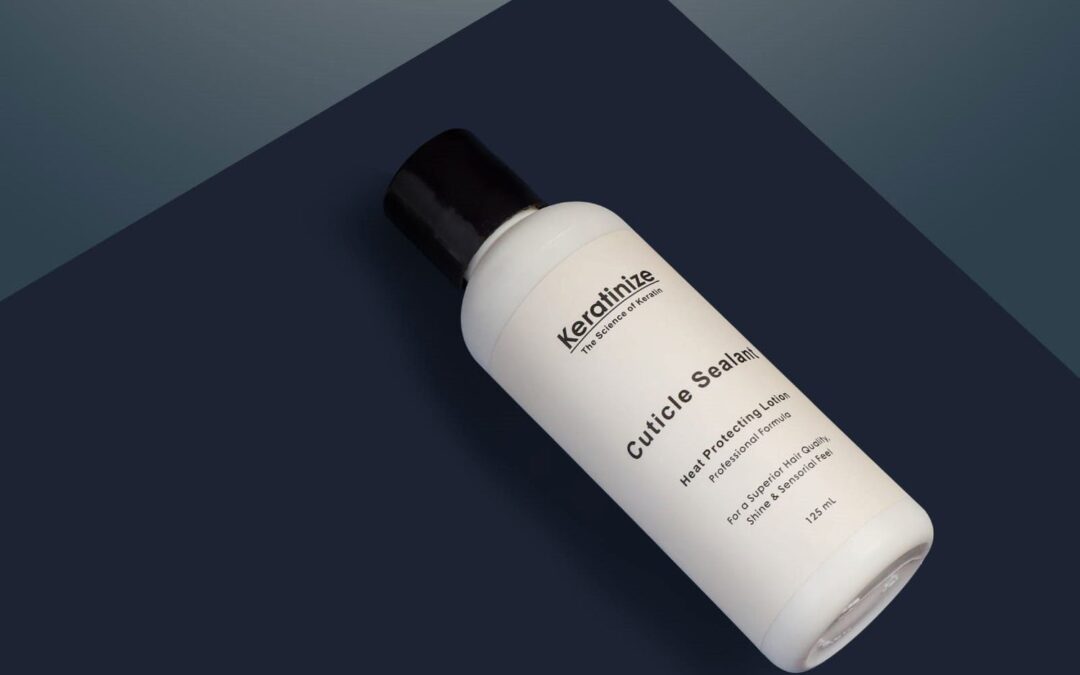
Keratinize Cuticle Sealant
Hair needs protection against heat energy to achieve a beautiful outlook and facilitate everyday hair grooming. The Keratinize Cuticle Sealant is specially crafted to protect hair against heat damage. Its formulation comprises multi-functional and thermally stable ingredients that can tolerate high temperatures of thermal styling. This Cuticle Sealant offers a beautiful outlook, immense shine, improved texture, and an amazing sensorial experience for your hair.
 Give it a try.
References & Further Reading
1. Zviak, C., The Science of Hair Care. Taylor & Francis: 1986.
2. CORBETT, J. F., The chemistry of hair‐care products. Journal of the Society of Dyers and Colourists 1976, 92 (8), 285-303.
3. Wortmann, F. J.; Wortmann, G.; Marsh, J.; Meinert, K., Thermal denaturation and structural changes of α-helical proteins in keratins. Journal of Structural Biology 2012, 177 (2), 553-560.
4. Nogueira, A.; Scanavez, C.; Carnelos, C.; Gaspari, A.; Joekes, I., Hair color changes caused by dyeing and thermal treatments. Journal of Cosmetic Science 2004, 55 (5), 437-447.
5. Ruetsch, S.; Kamath, Y., Effects of thermal treatments with a curling iron on hair fiber. International Journal of Cosmetic Science 2004, 26 (4), 217-217.
6. Gamez-Garcia, M., The cracking of human hair cuticles by cyclical thermal stresses. Journal of the Society of Cosmetic Chemists 1998, 49 (3), 141-153.


