Sep 19, 2025
Everyone desires soft, beautiful, and lustrous hair with a natural texture, body, and volume. The big question is, how can we achieve it? The answer lies in programming a suitable and compatible hair care routine. This schedule and well-crafted hair care routine require high-quality and multi-functional products. Leave-in conditioner is perhaps the most important among all products in a hair care regimen. The obvious reason is the nature of its formulation and mode of application.
A conditioner is designed to condition hair and improve its overall health and outlook. Rinse-off conditioner is the most common hair conditioning product consumers use. It has a very limited time of contact with the hair. It is applied while in the shower and rinsed off after 2-5 minutes. This may not be enough for a day-long conditioning and protection against environmental conditions, as hair is exposed to dry, wet, and humid conditions daily, particularly during outdoor time.
A leave-in conditioner is essential to address these concerns and provide day-long conditioning, along with protecting it against outdoor environmental insults.
How to choose a leave-in conditioner? And where to find it quality leave-in conditioner?
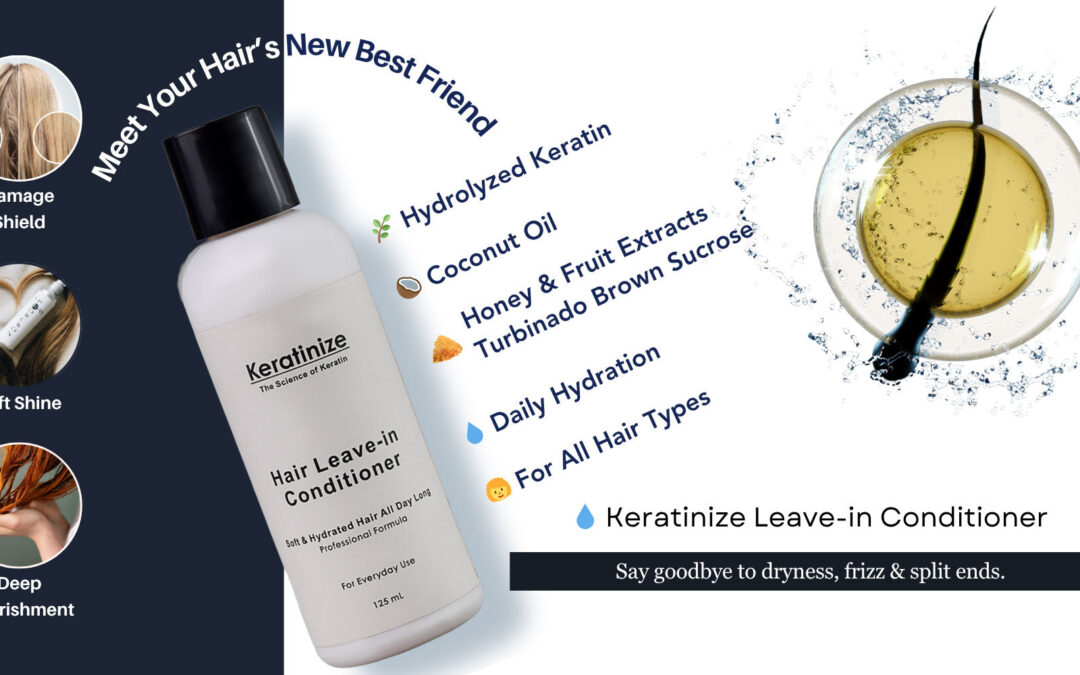
This blog introduces Keratinize Leave-in Conditioner, a new product in the Keratinize line, a gentle, lightly textured, creamy lotion ideal for a leave-in application. Let’s go through its science, formulation, key ingredients, and how to get the maximum out of its application.
Keratinize Leave-in Conditioner: Salient Features
Keratinize leave-in conditioner is a specially formulated product with a light, creamy texture that makes it easy to apply and work out on each hair strand. The product offers a wide range of benefits to hair, as listed here
◉ Hydrates hair with potent hydrating agents
◉ Address serious dryness and lifeless hair
◉ Removes the tangles
◉ Provides an ease of combing, styling & manageability
◉ Reduces static charge density to control flyaway
◉ Make hair soft with an amazing sensorial feel
◉ Lustrous hair with immense shine
◉ Minimize split ends
◉ Prevents hair breakage
◉ h2Frizz control, get rid of dull and deep casting
Ingredients
Water, Behentrimonium Methosulfate, Cetearyl Alcohol, Cetyl Alcohol, Glycerin, Cocos Nucifera (Coconut) Oil, Butyrospermum Parkii (Shea) Butter, Hydrolyzed Keratin, Mel (Honey) Extract, Saccharum Officinarum (Sugar Cane) Extract, Pyrus Malus (Apple) Fruit Extract, Turbinado Brown Sucrose, Trideceth – 12, Lactic acid, Caprylyl Glycol, Sodium Benzoate, Potassium sorbate. Fragrance, EDTA Disodium.
Behentrimonium Methosulfate
It is a cationic hair softening agent carrying a long hydrophobic carbon tail that provides conditioning, detangling, and softness. It attaches to the negatively charged sites of keratin amino acids via electrostatic chemical bonding and withstands washing, providing excellent conditioning. Countering the negative charge density also minimizes the flyaway problem.
Turbinado Brown Sucrose
Turbinado Brown Sucrose is a natural brown sugar component commonly used in beverages, food, and cosmetics. It is an amazing hydrating agent because of multiple water-binding sites on sugar molecules. Due to its organic nature and polymeric polysaccharide molecules, it binds, holds, and delivers water molecules to the scalp and hair fibre even at low humidity levels. It also gives a pleasant odour and aesthetic feel to the leave-in formulation.
Lactic acid
Milk-derived alpha-hydroxy acid is known for its superior hydrating benefits to skin and hair, Lactic acid is the key player in building the required pH level as well as binding water molecules to the hair.
Coconut Oil
An excellent natural emollient with multifunctional benefits to hair and scalp, coconut oil is a rich source of fatty acids. Its medium-range carbon chain, mainly comprising lauric acid, provides a very delicate lubrication to the hair shaft. This shorter chain acid penetrates the hair shaft and also improves overall fibre tactile properties.
Shea Butter
Shea butter is a time-honored hair and skin conditioning agent with its special buttery texture offering a unique sensorial feel to the formulation. It is rich in saturated fatty acids that lubricate the hair surface, and also imparts a vibrant, shiny outlook.
Hydrolyzed Keratin
Hydrolyzed keratin is a fiber-strengthening and deep conditioning agent that repairs the broken site, targeting the strong protein-to-protein adhesion. A right molecular weight keratin peptide sticks to the amino acid sites at the surface or deep inside the cortex via a weak covalent bond to make up for the lost protein of hair. This mechanism leads to a rapid recovery and restoration of hair’s mechanical strength. This also works greatly to smooth the cuticle surface, enhancing the water binding (due to increased hydrophilicity) and boosting overall hair shine.
Hydrating Natural Extracts
Leave-in conditioner formulation also features Honey Extract, Green Apple Extract, and Sugar Cane Extracts. These three ingredients are hydrosols (solutions in water) selected due to their high fruit acid content, anti-oxidants, and sugar contents. These ingredients boost the hydrating benefits to hair and scalp and offer a soothing effect. Flavonoids and polyphenols work as natural antioxidants, mitigating any potential free radical-induced damage to hair and scalp.
How to use it?
Apply a generous amount of product to your wet or dry hair. Work it out to get the product to each hair strand.
What type of hair should use this product?
All types of hair, any ethnic background, equally good for virgin low-porosity hair to dry & damaged high-porosity hair. Does not cause any heaviness, any greasy feel, or leave any oil residues.

Sep 19, 2025
Blow Dryer, Curling Rods & Flat Irons
Thermal styling is popular among consumers as a method to redefine their hairstyles. It provides excellent hair alignment with a defined curl pattern and sets the hair for a brief period. Electric devices deliver heat energy within a temperature range of 140 °c to 220 °c. In previous blogs, we noted that this heat energy can significantly damage the keratin in hair fibers. Managing this damage is crucial to preserving the integrity of hair and maintaining its natural texture, shine, and appearance.
This can only be achieved by correctly using heated equipment at the appropriate temperature, with pre-heat protection applied to the hair. Educating consumers and hair stylists on how to use this thermal equipment effectively is essential. This blog offers a practical manual for using a blow dryer, curling rod, and flat iron. Important questions are answered, including when to use these tools, how to use them, and how to ensure our hair’s health by minimizing the adverse effects of heat energy. How can we maintain a beautiful appearance after applying heat?
Familiarize yourself with the equipment.
Three types of equipment are commonly used for thermal styling
Blow Dryer – used to dry hair with hot air blowing in the temperature range of 60 oC – 70 oC. The objective is to dry out hair and remove moisture after the washing.
![]()

Curling Rod – A ceramic or metal rod that contains an electric filament for heating. The temperature ranges from 140 °c to 200 °c. A section of hair strands is inserted into the opening of the curling rod, and heat is applied for 1-3 minutes. This shapes the hair fibres into a circular pattern, transforming straight hair into curls. The heat setting maintains the curl for a short time; however, when washed, the hair returns to its original style.![]()

Flat Iron – A ceramic or metallic flat plate, hair is placed in between the plates and heated. The temperature ranges from 150 oC to 240 oC. The process is repeated multiple times to straighten curly hair and is set in a Bone-straight shape removing any curls.

Things to do before using thermal equipment
◉ Read through the manual & usage instructions for your blow dryer, curling rod or flat iron machine
◉ Check the temperature control and its functioning Wash hair and scalp Blot out excess water using a towel gently.
◉ Apply a combing lotion or preferably heat-protecting lotion
◉ Dry them using a blow dryer at a normal temperature
◉ Comb your hair gently
◉ Remove any knots and tangles
◉ Divide the whole scalp area into small sections
◉ You are ready for Curling Rod or Flat ironing
Things to avoid
Heat application without proper assessment of hair porosity and overall condition
Never do thermal styling on wet hair Expose hair fibers to heat without adequate protection. Use high temperature all in one go, slowly raise the temperature, use a gradient increase
Wet or Dry Hair: What to do?
Never do it on wet hair! Heating wet hair may intensify the extent of damage.
Hair adsorbs water molecules during washing and gains weight. Wet hair also has a higher diameter compared to dry hair due to longitudinal and lateral swelling. Applying heat generates steam in a localized position underneath the cuticle layer. This can be seen as a bumps or bubble formation under the microscope.
As a result, the surface becomes rough reducing the surface smoothness. It makes it difficult to comb and get rid of tangles. That’s why, it is not recommended to use a blow dryer, curling rod or flat iron on wet hair.
Pre-Heat Protection is Essential: Never Miss it Out
Applying a heat-protecting product is vital before using any sort of thermal styling technique. One should never do thermal styling without protection against heat energy. A good quality heat-protecting formulation must contain thermally stable ingredients that can withstand excessive and repeated exposure to heat. How to Treat Heat-Damaged Hair Functional silicones and some natural emollients can tolerate this heat. These ingredients have a high smoke point and do not degrade under the heat.
What temperature to go?
The answer to this question needs a careful assessment of the hair fiber texture and its porosity level. A correlation has been proposed here as a basic guideline for users.
◉ Assessing Hair Texture
◉ Fine Asian hair – Low to moderate temperature
◉ Medium Asian coarse – Moderate temperature
◉ Thick Asian Straight – Moderate to high temperature
◉ Assessing the Porosity level
◉ Low Porosity Virgin hair – Moderate to high temperature
◉ Medium Porosity Hair – Moderate to high temperature
◉ High Porosity Chemically processed – Low temperature
◉ Final Words & Tips
Thermal styling is a great approach to redefining your hairstyle, however, it requires some considerations before exposing hair to heat.
Make an assessment of your hair, its condition, level of dryness and porosity to assert potential heat-induced damage.
Avoid over-application of heat processing. Never do thermal styling on an everyday basis. It’s only once in a while to go.
Always do a trial test on a small section of hair before full head application of any new hair care routine.
Start with a low-temperature point and go slowly to a higher temperature level slowly increasing the heat.
During the week or so, follow up with a deep hydrating mask to mitigate heat damage to hair. This would restore the natural hair texture and regain its natural shine.
Thanks

Sep 19, 2025
How to Treat Heat-Damaged Hair
Thermal Hair Styling is one of the first grooming techniques adapted to style and manage scalp hair fibers.1 Iron rods and curling pads made of metallic plates were first heated in an oven, and then hair fibers were wrapped around them. This ancient technique offered promising results and gained popularity despite exposing hair, scalp, and consumers to hot metallic rods. Over the years, the equipment improved, and more user-friendly techniques were developed, especially addressing safety concerns.
Today, curling rods, flat irons, and blow dryers are used by all types of consumers. Besides the benefits of hair styling, grooming, and facilitating hair manageability, heat processing damages hair fibers. These techniques expose hair fibers to a heat source at high temperatures. The previous blog discussed the detailed mechanism and nature of changes inside the hair structure. This blog discusses how to preserve hair fiber against repeated heat exposure and minimize the adverse impact of heat on hair health.
How can we repair the damaged hair fibers to restore their natural outlook, body, and texture? Let’s find out the answer to this question.
Signs of Heat-induced damage to Hair
Excessively heat-processed hair fibers show visible signs of damage. A few of them are listed here
◉ Dryness
◉ Rough feel
◉ Broken hair strands
◉ Split ends
◉ High hair porosity
◉ No definite curl shape
◉ Color fading
Microscopic analysis reveals that heat damages the surface smoothness and causes rupture of the fiber structure.
A Quick Look at Damage Mechanism: What Happens to Hair on Heating?
Heat exposure to hair fibers during thermal styling degrades hair keratin and induces permanent changes in protein structure. Keratin can not withstand excessive heat and will denature. This alters the nature of protein and changes the physical and chemical properties of hair fiber. Damage to hair protein undermines the mechanical strength of hair fiber, its cosmetic features, and its texture.2-4 Hair also loses its total protein content and becomes porous.
Heat application also removes water from the hair surface. The heat energy evaporates the hair’s moisture content, and water molecules escape from the cuticle surface. Under high energy conditions, steam formation underneath the cuticle layer causes a bump formation on the surface, leading to abrupt rupture and breakage on the hair surface. This endangers the integrity of hair fibers and leads to hair breakage. These bumps or chips have been observed under the microscope for heat-processed hair fibers.5-6
Big Question: How to Repair Heat-Damaged Hair Fibers
Heat-damaged hair fibers require a customized, specifically formulated hair care regimen to restore their natural texture and body. Here are some key aspects of repairing heat-damaged hair fibers.
Hydration for Thermally Processed Hair
Water is the key to hair life. Heat processing diminishes the hair water content and makes hair dry, rough, and brittle. Localized steam formation damages the cuticle layer and alters the surface properties, making it difficult to comb, brush, and style. Hence, it is vital to add and maintain the moisture level of hair fibers. Hair care products containing humectants and hydrating agents are strongly recommended for this job. Also, consumers should avoid using any hair care product that contains drying alcohol (e.g, ethyl alcohol) or other harsh chemicals (SLS, sodium hydroxide, etc.) that can dry the hair fibers. Our recommended humectants and hydrating ingredients are
◉ Vegetal Glycerin
◉ Propanediol
◉ Alpha Hydroxy acids, preferably Lactic acid and Sodium Lactate
◉ Sodium PCA or Zinc PCA
◉ Betaine
◉ Panthenol
◉ Aloe Vera Juice or Gel
◉ Ceramides
◉ Emollients
Emollients are key ingredients that prevent the loss of water molecules from the hair surface. They are generally hydrophobic liquids that form a water-resistant layer on the hair surface and therefore, minimize water escape. Natural emollients are preferred because of their multifunctional benefits, green origin, and sustainable supply chain. Deep Conditioning products, e.g. Rinse-Off Conditioners, Deep Conditioning Masks, and leave-in conditioners, should contain these natural emollients to improve the quality of heat-damaged hair fibers. These natural emollients also enhance the sensorial texture and dry feel following the application. Our selected and preferred natural emollients for heat-damaged hair fibers are
◉ Shea Butter
◉ Cocoa Butter
◉ Mango Seed Oil
◉ Babassu Oil
◉ Coconut Oil
◉ Apricot Kernel Oil
◉ Meadowfoam Seed Oil
◉ Baobab Oil
The best way is to have a blend and combination of two to three different oils or butter in a formulation. For heat protection, the selected natural oil should have a high smoke point to avoid smoke formation during thermal styling.
Keratin
Keratin and related amino acids are excellent active ingredients that target the cuticle surface and inner cortical structures. The application of keratin on heat-processed hair improves the surface smoothness of the cuticle layer, and because of their hydrophilic nature, proteins also enhance fiber moisture levels.
Silicones
Silicones are multifunctional materials with strong surface coating properties and water repellency. They are excellent surface smoothening agents that address cuticular friction and minimize fiber-to-friction friction. These ingredients are highly stable and do not undergo any degradation or molecular breakdown during heat exposure. That’s why they demonstrate excellent heat protection to hair fiber during blow drying and flat ironing. Having a small dosage of silicone oils can preserve hair proteins and minimize the adverse impact of excessive heating. Some key heat-protecting silicones are
◉ Dimethicone
◉ Cyclomethicone
◉ Cyclopentasiloxane
◉ Phenyltrimethicone
◉ Amodimethicone
There is nothing wrong with using silicones as long as they are used in small dosages and low frequency.
How can we repair the damaged hair?
Repairing damaged hair fibers requires a comprehensive strategy to restore their surface quality, shine, sensorial, texture, and hair body. Besides having good quality and customized hair care products, it requires a well-thought-out plan of a day-to-day hair care routine, consistency, continuation, dedication, and commitment. There is no such magic product to fix the problem. One needs to try a set of products and figure out what works for their hair. More importantly, keep it simple and work out the basics. This will ensure a cost-benefit and yet an effective hair care regimen. Some key tips are described below as a basic guideline.
Key Tips to Restore Hair Texture
◉ Prevention is better than cure. Try to cut down on heat processing.
◉ Use normal air-blow drying instead of hot air.
◉ Use a low heat level for flat ironing.
◉ Always apply a Heat-Protecting lotion before blow drying or flat ironing.
◉ After washing, always remove excess water using a towel. Applying heat to wet hair causes more damage to the fiber.
Recommended Product
Keratinize Cuticle Sealant is a specially formulated product to minimize the impact of heat on hair, control water loss, and prevent hair breakage. It is a blend of humectants, natural emollients, and thermally stable yet volatile silicones. This formulation offers fiber detangling, cuticle alignment, and minimal protein loss. It prevents water loss from the fiber and imparts intense shine by improving light interaction with the hair fibers. Strongly recommended for medium to high-porosity hair, especially chemically processed hair fibers with bleach, perms, permanent colors, and straighteners.
Summary
Heat-damaged hair fibers are dry, brittle, and rough. They are difficult to style and manage during everyday grooming. These hair fibers require a comprehensive and customized hair care regimen to restore their natural outlook, shine, texture, and body. Keratinize Cuticle Sealant offers a thermal shield against heat exposure and is strongly recommended for hair care consumers who often employ heat styling.
References
1. Zviak, C., The Science of Hair Care. Taylor & Francis: 2005.
2. Shiel, S., Hair health and management of common hair disorders. Journal of Cosmetic Dermatology 2007, 6, 12-17.
3. Vagkidis, N.; Li, L.; Marsh, J.; Chechik, V., Synergy of UV light and heat in peptide degradation. Journal of Photochemistry and Photobiology A: Chemistry 2023, 114627.
4. Wortmann, F. J.; Wortmann, G.; Marsh, J.; Meinert, K., Thermal denaturation and structural changes of α-helical proteins in keratins. Journal of Structural Biology 2012, 177 (2), 553-560.
5. Crawford, R.; CR, R., A hysteresis in heat dried hair. J. Soc. Cosmet. Chem 1981, 32, 27-36.
6. Tanamachi, H., Temperature as a moisture cue in haptics on hair. Inter. J. of Cosmet. Sci 2011, 33 (1), 25-36.


